Nerves of Steel is the distraction-recovery trainer for musicians, speakers, and performers with an audition, jury, or opening night on the calendar.
You've done the work in a quiet, controlled space. Live venues aren't cooperative. Practice Mode adds controlled, randomized distractions so you can recover fast, while Performance Mode creates a virtual concert space where you can run your program in a realistic, audience-like environment before the real stage.
Start free with Practice Mode and Scenes. Pro is $7.99/month or $59.99/year. See what’s included.
Embrace the Chaos!
You are a...
You've put in the time in the practice room and built a strong foundation. What's harder to rehearse is the venue itself. Sounds, movement, and small interruptions don't exist when you're practicing alone.
Practicing with controlled distractions helps those moments feel more familiar, so your attention stays with the music and not on unexpected texts in row G.
Preparation gives you confidence, but real venues bring variables you can't plan for. A sound, a movement, or a shift in the ambience can momentarily pull attention away from your flow.
Practicing recovery under mild distraction helps you stay grounded and continue speaking with clarity when those moments arise.
Teaching performers doesn't end at material preparation as you likely already know. Guidance on how to steady ones nerves before a program or audition is a big part of the work.
Spending time training students to handle unexpected distractions can make a difference in their ability to weather the storm of a live performance. Auditions can be even more anxiety inducing. Judges taking notes, whispering, dropping a pencil: all moments that can break concentration instantly. The resilience to recover can be trained.
Auditions and performances happen in unpredictable environments. Most of your practicing has been in controlled and optimal settings.
As part of your regular routine of preparation you can add resilience training against the kinds of disruptions that you can and cannot predict.
You’d like to imagine that you can work through those moments and not miss a beat. Nerves of Steel lets those situations become familiar before you even get on stage.
Practice builds confidence but unexpected moments can still shake it. This app is for you.
What Nerves of Steel can do for you
Many people already use techniques like the Alexander Technique, breathwork, visualization, or mental reframing. These are valuable tools.
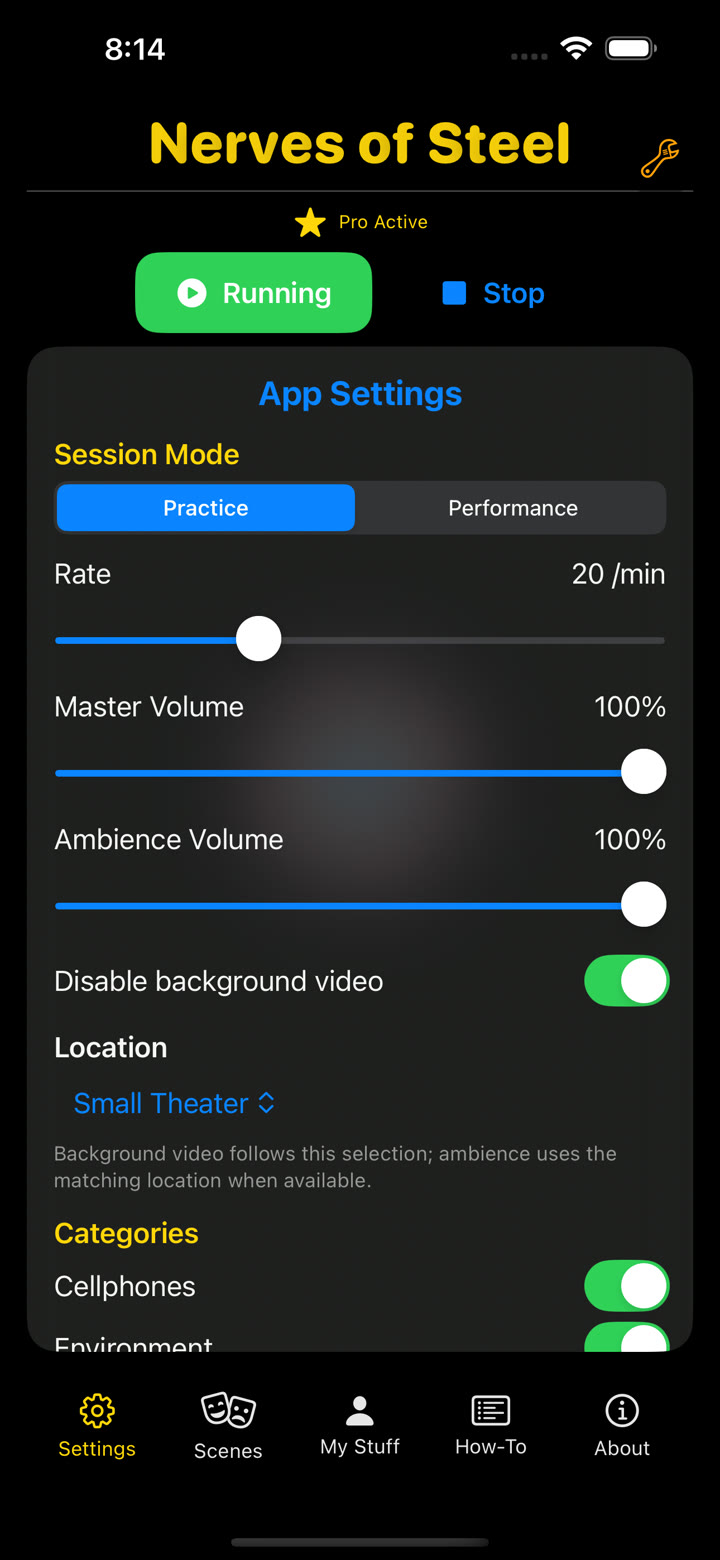
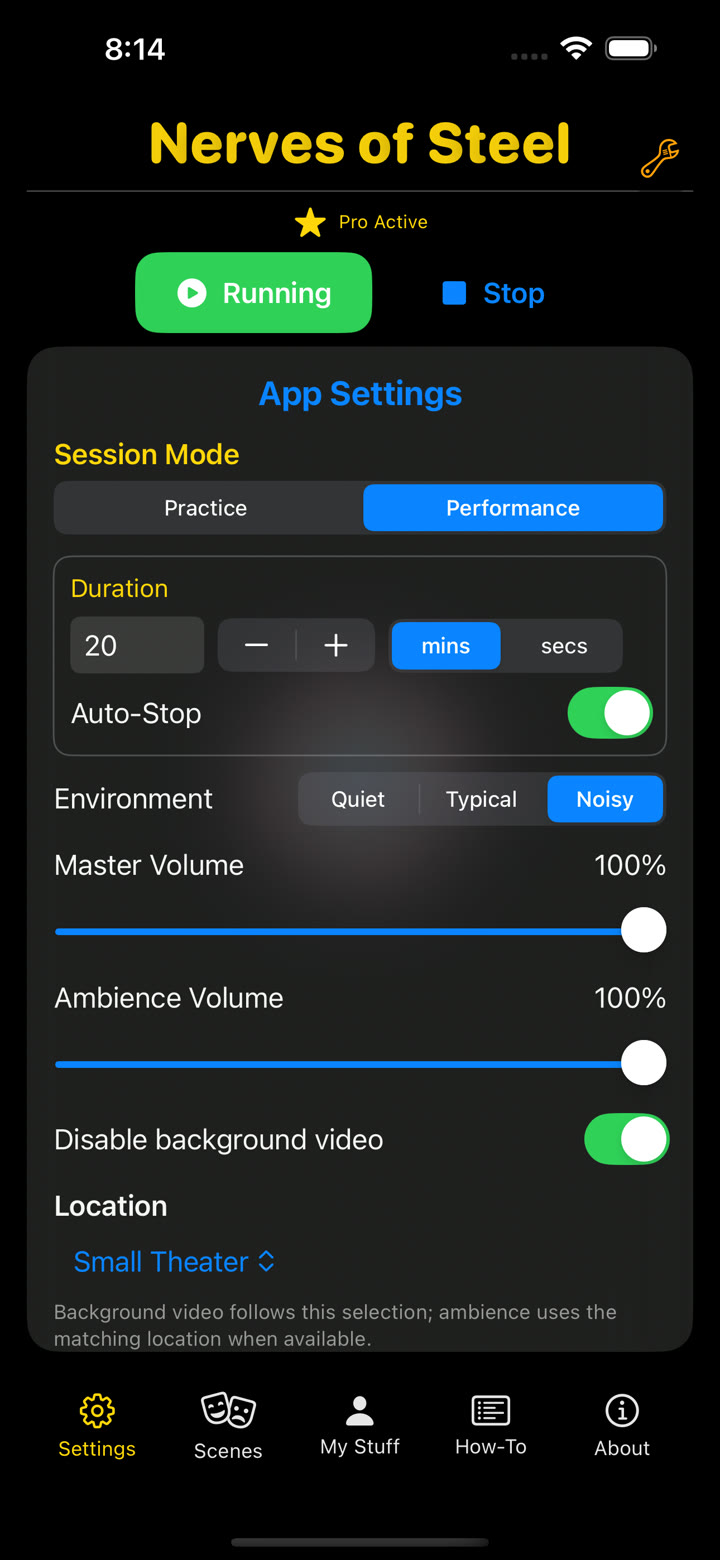
Nerves of Steel adds two practical layers: Practice Mode trains quick recovery with controlled interruptions, and Performance Mode builds familiarity with the feel and pacing of a real venue inside a virtual concert space.
graphic_eqPractice Mode: controlled, realistic distractions that train quick recovery.
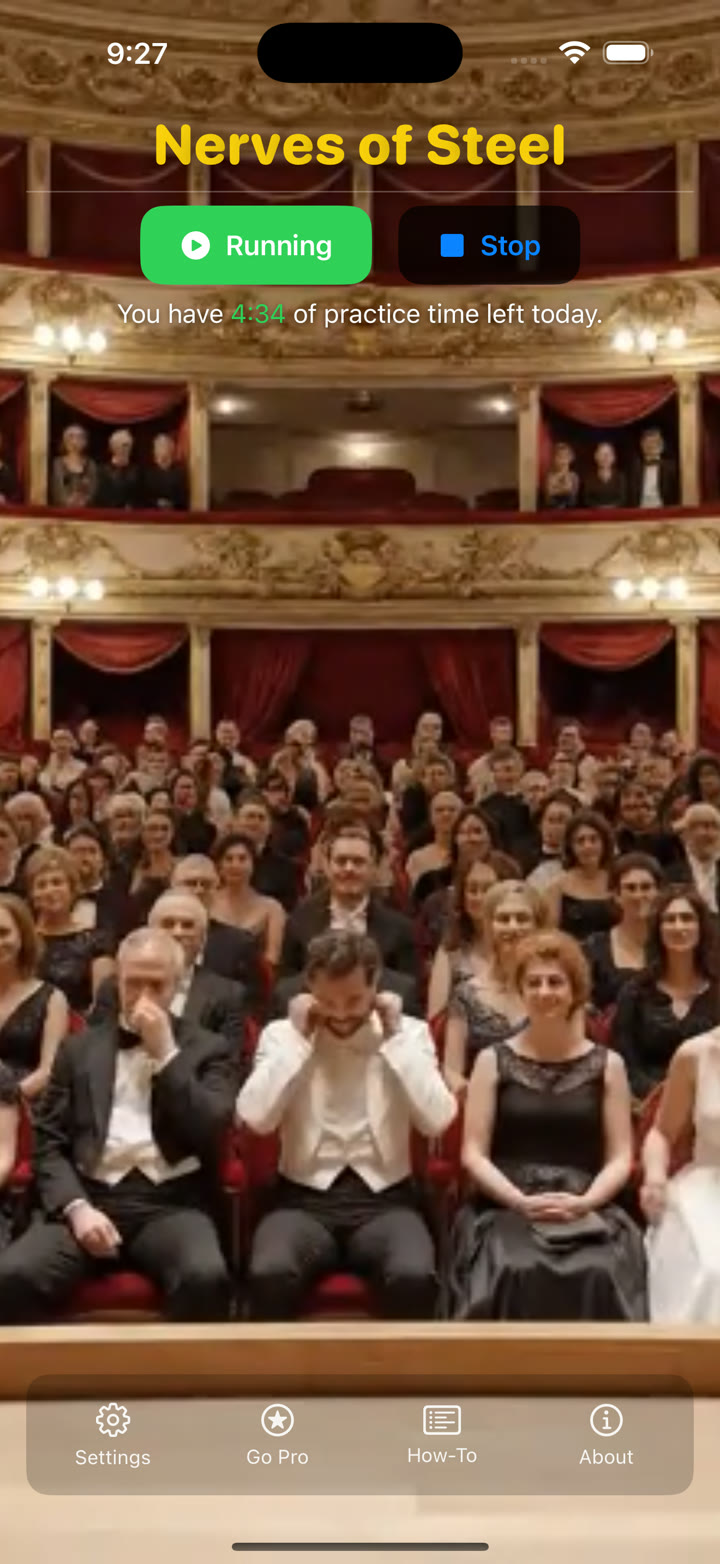
theater_comedyPerformance Mode: an immersive virtual concert space with ambience, cues, and pacing.
tuneAdjust timing and intensity so training stays challenging without becoming overwhelming.
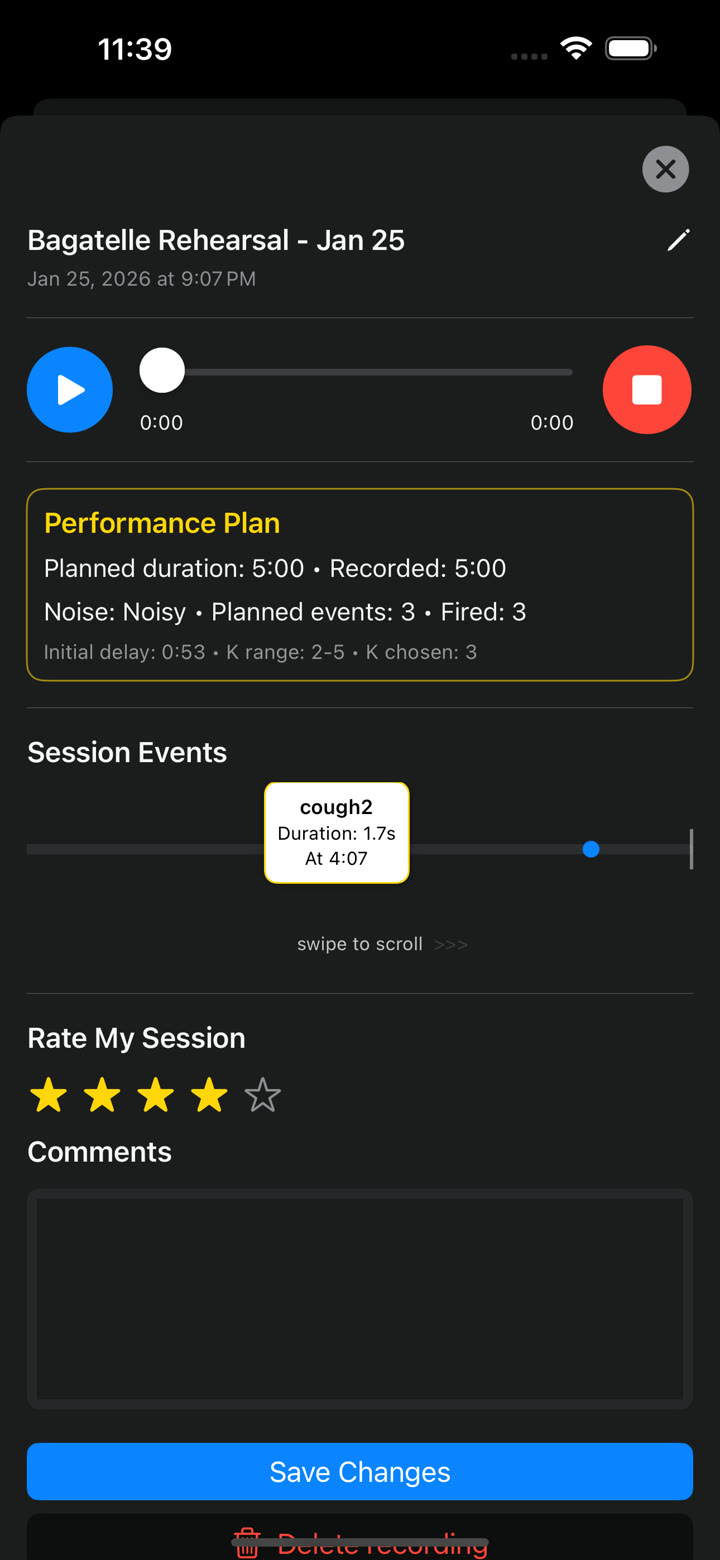
timelineRecord, rate, and review sessions to see when distractions fired and note what you want to train next.
uploadAdd your own distractions, because you know your world best.
Practice ModeSet the distraction rate, intensity, venue, and sound categories before you start.Performance ModePlan the duration and room noise, then run your full program in a virtual venue.Session in progressDistractions fire while you keep playing, speaking, or presenting.Review what happenedSee when distractions fired, rate the session, and note what to train next.
How you can use it
Use Performance Mode when you want to rehearse the full experience: step into a virtual venue, set the length, and run your program with ambience and audience-like cues to build comfort with the feel of the room.
Use Practice Mode when you want to drill recovery: short sessions with controlled distractions help you notice the interruption and return to your material quickly before the real performance.
Train the return so the jury or audience sees the composed performer you prepared to be—not the one moment the room went wrong.
Students and educators
Rated 9+. Calm, non-alarming language. Suitable for structured student practice and educator support.
Educator studio access. Teachers with a paid subscription can request complimentary full access for their students. Email us with your studio size and we’ll provide a limited-use App Store redemption code.
Start with Practice Mode. Add performance tools when you need them.
Free practice
$0
Practice Mode
Scenes
Kids Mode is always free
Recommended
Pro performance
$7.99/month or $59.99/year
Save about 37% with yearly billing. That works out to $5/month—less than one private lesson.
Performance Mode
Recording tools
Rating tools
Download the app for free. Choose Pro in the app only if you want the additional performance, recording, and rating tools. Payments, renewals, cancellations, and refunds are handled by Apple.
Ready for a more realistic practice room?
Practice Mode, Scenes, and Kids Mode are free. Pro is $7.99/month or $59.99/year. See what’s included.
Nerves of Steel is a practice tool for performance preparation and does not provide medical diagnosis or treatment. For medical or therapeutic guidance, consult a qualified professional. See Terms.
Luis Andrei CoboPianist and developer of Nerves of Steel
When I was 17 and auditioning as a piano major, I had only performed in recital once and had never faced a formal jury. Each school was a different environment, and I was unprepared for how much those settings would affect my focus.
At one audition, I began the opening of Beethoven’s Waldstein Sonata when someone behind me dropped a pen in a quiet passage. That brief sound hijacked my attention, and I don’t remember the rest of the audition. Other auditions were in cavernous rooms with unfamiliar acoustics or lighting, or on a large stage with the jury barely visible in the distance. I had practiced the repertoire exhaustively, but I had never practiced performing under disruption.
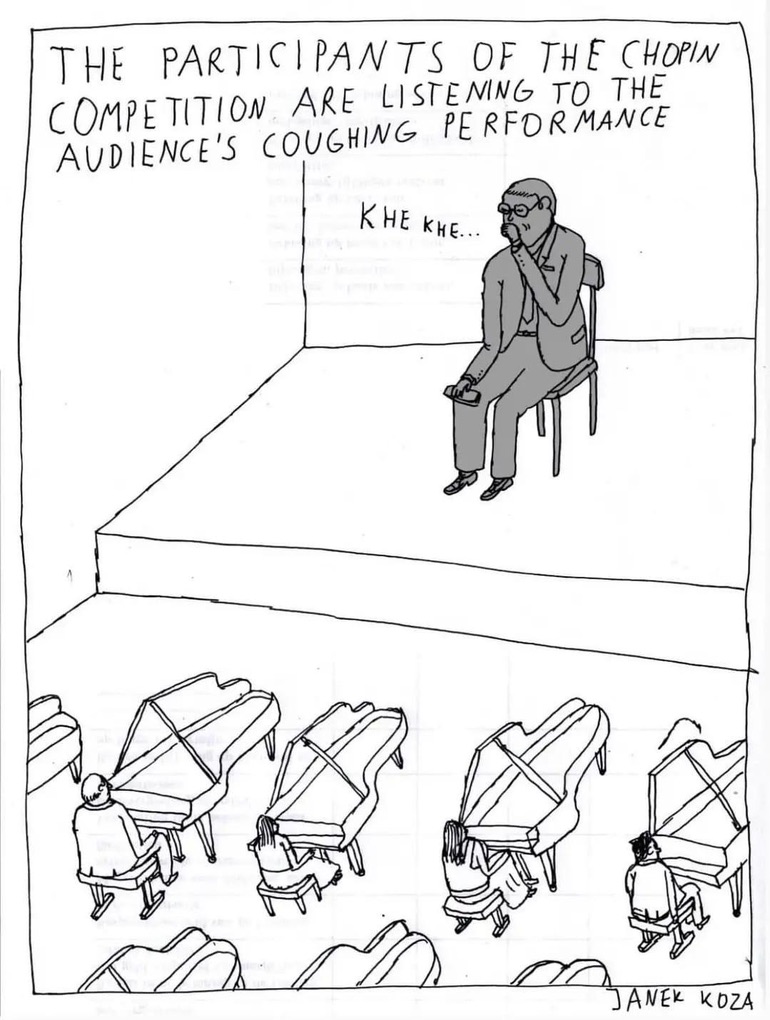
Tap to enlargeCartoon by Janek Koza. Used with permission.
That realization stayed with me. On October 13, a friend showed me a cartoon by Janek Koza of Chopin Competition participants listening anxiously to audience coughing. It captured, with uncomfortable accuracy, what every performer recognizes: small interruptions can feel overwhelming under pressure. I started building a demo for the app that same day.
I have spoken with many teachers over the years and heard the same concern. The practice room can be controlled; the stage is not. It takes time to build the kind of focus that holds when the room doesn’t cooperate.
If any of this feels familiar, Nerves of Steel is here when you’re ready to rehearse the real thing.